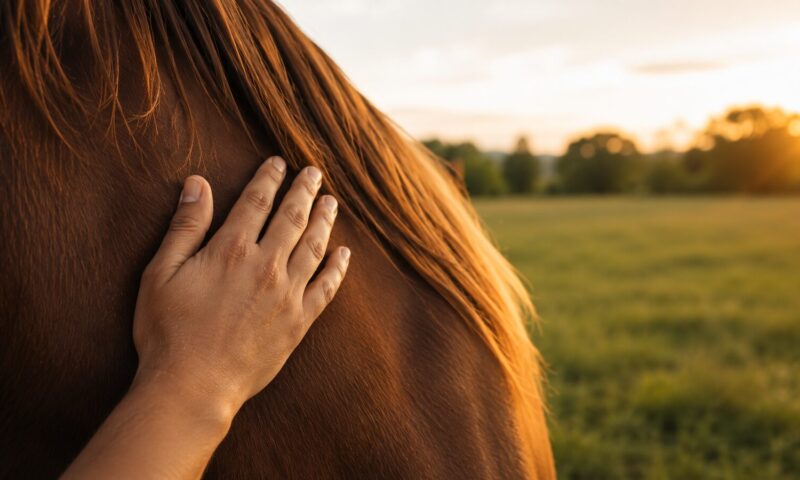
Equine-Assisted Wellness for First Responders
Equine-assisted wellness is one of the most grounding experiences we offer, and first responders are often surprised by how quickly it reaches them. After years of running toward what everyone else runs from, many first responders find that talking is not always the way in. Being present with a horse can be. This gentle, hands-on approach to wellbeing meets you without demands and without a script, which is exactly why it works.
If you have ever wondered how spending time with horses could support your resilience, this guide explains what equine-assisted wellness is, why it is so effective for first responders, and how it fits into a broader whole-person approach.
What Equine-Assisted Wellness Is
Equine-assisted wellness brings people together with horses in a safe, guided setting to support emotional regulation, connection, and self-awareness. It is not riding lessons, and it is not clinical treatment. It is a wellness experience built on presence. You spend time with a horse, guided by trained facilitators, and pay attention to what happens between you.
Horses are prey animals, so they are exquisitely attuned to their surroundings and to the people near them. They respond honestly to your energy and body language, which makes them remarkable mirrors. When you are tense, they notice. When you settle, they settle. That immediate, non-judgmental feedback is the heart of the work. Organizations like PATH International have helped establish thoughtful standards for equine-assisted services, and a good program treats both the people and the horses with care.
Why It Works So Well for First Responders
The demands of emergency work ask a lot of the nervous system. Long shifts, high stakes, and repeated exposure to difficult scenes can leave the body stuck in a state of high alert, even long after the call is over. First responders are trained to hold it together, which is a strength on the job and a heavy load to carry home. Equine-assisted wellness offers a different kind of relief.
Co-Regulation and Nervous System Regulation
Horses are large, calm, and steady, and being near a regulated animal can help a keyed-up nervous system find its own baseline again. This is sometimes called co-regulation. Standing quietly with a horse, matching your breath to the rhythm of the moment, can help you shift out of high alert and into something closer to rest. That experience of nervous system regulation is not just pleasant; it is a skill you can begin to recognize and return to.
Connection Without Words
Not everyone wants to talk, and no one should have to before they are ready. Equine-assisted wellness invites connection without requiring a single word about what you have seen or carried. For first responders who value action over analysis, this wordless, experiential approach often lands where conversation cannot. You are simply present with another living being that asks nothing of you but honesty.
What a Session Feels Like
Sessions are calm and unhurried. You might groom a horse, walk alongside it, or simply stand nearby and notice your own reactions. Facilitators guide the experience and keep everyone, including the horses, safe, but they leave plenty of room for you to find your own pace. There is no performance to give and no right way to do it.
Many first responders describe a distinct shift during a session: shoulders drop, breathing slows, and the constant background hum of vigilance quiets for a while. That is the point. You are practicing what it feels like to be grounded, so you can find your way back to it on your own. It pairs naturally with the other whole-person experiences on a wellness retreat, where rest, movement, and reflection reinforce one another.
Where It Fits in Whole-Person Wellness
Equine-assisted wellness is powerful on its own, and it is even more valuable as part of a whole-person approach. At Holistic Healing and Health Foundation, it is one of several experiences woven through our program, alongside restorative rest, intentional movement, nutrition, and group reflection. The idea is not to fix one thing but to support the whole person, so progress in one area reinforces the others.
Because HHH works as a bridge to a network of best-in-class partners, we can connect first responders to specialized equine programs and facilitators rather than trying to do everything ourselves. That partner model, described on our partners page, means you get quality experiences and continuity of support. You can learn more about programs designed with the first-responder experience in mind on our first responders page.
If things ever feel overwhelming, help is available now. The Veterans Crisis Line (dial 988, then press 1) serves veterans and their families, and the 988 Suicide and Crisis Lifeline is available to everyone.
Why Being With Horses Helps
The calm that first responders describe after time with horses is not just a nice feeling — it reflects something real about how the body settles. Horses are large, sensitive herd animals whose wellbeing depends on reading their surroundings moment to moment. In their presence, people tend to slow down, soften their posture, and breathe more evenly, often without consciously trying.
Part of what makes the experience powerful is honest feedback. A horse responds to how you carry yourself right now, not to your history or your job title. Approach with tension and the horse notices; settle, and the horse tends to settle with you. That immediate, non-judgmental mirror gives you a low-stakes way to notice your own state and shift it — a skill that transfers directly to the demands of shift work and high-pressure calls.
There is also the simple matter of being outdoors, doing something with your hands, in the company of a living being that asks nothing of you. For people whose work keeps them scanning for the next problem, that combination is a rare invitation to stand down. None of this is clinical treatment, and a thoughtful program is careful to frame it that way — it is a wellness experience that supports self-awareness and steadiness, and it sits comfortably alongside any other support you choose. Standards organizations such as PATH International help ensure these experiences are run safely for both people and horses.
Because the work is experiential, its benefits tend to build with repetition rather than arriving all at once. A single session can be a genuine relief; a series, woven into a broader plan, helps the calm become something you can find on your own. That is why equine-assisted wellness rarely stands alone in a thoughtful program — it is one grounding thread among several, reinforced by rest, movement, and connection so the whole experience adds up to more than any single part.
You also do not have to arrive believing any of this. Many first responders come in skeptical and leave a little surprised at how much lighter they feel. Curiosity is enough to begin.
If you are considering it, know that the experience adapts to you. Some people are hands-on from the first minute; others prefer to observe and warm up slowly, and both are completely welcome. Facilitators take their cues from you, never the other way around — which is part of why the work feels safe even for those who arrive guarded. That respect for your pace runs through every part of the HHH approach, and it is what turns a single grounding afternoon into something you can build on.
It is also worth saying that this is not about the horse fixing anything. The horse simply offers an honest, unhurried presence; what you do with that — the noticing, the settling, the small shift in how you carry yourself — is yours to keep long after the session ends.
Common Questions About Equine-Assisted Wellness
Do I need experience with horses?
No experience is needed. Facilitators guide everything and keep the setting safe, and many participants have never been around horses before. Comfort grows quickly, and there is never any pressure to do more than you want to.
Is this the same as therapy?
Equine-assisted wellness is a wellness experience focused on presence, regulation, and connection, not a clinical treatment for a condition. It can be a meaningful part of a broader whole-person approach, and it complements, rather than replaces, any professional care you may choose separately.
What if I do not consider myself an “animal person”?
That is completely fine. You do not have to bond with a horse or feel an instant connection for the experience to be valuable. Even simply being near a calm animal and noticing your own responses can support resilience over time.
A Grounded Way Forward
Equine-assisted wellness gives first responders something the job rarely allows: a chance to be still, present, and honest without having to explain a thing. Through quiet connection with a steady animal, you can practice nervous system regulation, rebuild trust in your own calm, and take a real step toward whole-person wellbeing.
If this approach speaks to you, we would love to help you experience it. Explore the HHH Experience, learn about support for first responders, or begin an application when you are ready. You can also support the mission so more first responders can find this kind of grounded care.